 Brandon Tucker
If you're trying to figure out how to break 90 in golf, here's the honest answer: it's probably not your swing. Breaking 90 and achieving that coveted score starting with an '8' is seen by many golfers as the moment you're becoming a truly avid player who can manage their ball with some real skill. But most golfers who can't get out of the 90s have a strategy problem, a decision problem, and a self-awareness problem before they have a mechanics problem.
In order to break 90, you need to eliminate the blowup holes, clean up your short game, and be able to find your wayward shots when you inevitably miss. The gap between 95 and 88 isn't primarily about ball-striking. It's about what you do before the bad shots happen, and what you do right after.
Breaking 90: The Simple Math
On a par-72 course, breaking 90 really means shooting better than bogey golf on average. That's it. Eighteen bogeys is an 18-over 90, which barely misses. You're that close.
But here's the problem: it's a lot easier to record a double bogey than a birdie. Bogey is your friend. For every double you make, you better have a par somewhere to back it up. Once you start recording triples and quads, you're against the wall fast. A double, a triple, and a quad in the same nine holes can turn a manageable 44 into a 50 before you've processed what happened.
The goal isn't to make pars. The goal is to protect bogey. Every hole where you walk off with a 5 on a par 4 is a win. The round falls apart when a handful of holes become something much uglier.
1. OB Off the Tee
Out of bounds is the most punishing outcome in recreational golf, and the golfer who hits one OB and shrugs it off as bad luck is missing the point. One stroke-and-distance penalty costs you two strokes from where you'd have been if you'd just hit a bad shot that stayed in play. It's not a bad hole. It's a potentially round-ending sequence.
The fix is not hitting it more carefully with your driver. The fix is picking a club off the tee that you cannot hit out of bounds, and swallowing your ego about it. A 3-wood, a hybrid, a 5-iron, whatever club you actually control. Hitting a 3-wood 210 yards into the fairway on a 390-yard par 4 leaves you 180 out, and a 180-yard approach followed by two putts for a bogey is worth infinitely more than a driver OB followed by a re-tee, a punch-out, and a six.
On tight holes, you are not "leaving yourself too much club." You are not "playing scared." You are playing golf. Knowing when not to hit driver is a skill, not a surrender.
2. Sloppy Short Game
Here's the hole that kills 90s shooters: a par 5 where you reach the layup zone in two, then skull a 50-yard wedge over the green into the rough, blade the chip back across, and card a seven. Three shots thrown away from 50 yards.
The short game has to be significantly cleaned up if you're going to break 90, and this is where most of the low-hanging fruit lives. The irony is that short shots feel easier, so golfers practice them less, treat them less seriously, and get careless with them. The 50-yard wedge is one of the trickiest shots in recreational golf because there's no full swing to rely on. Partial swings demand better mechanics, better feel, and more practice time than most golfers give them.
What to do: find your reliable go-to yardage with your most-lofted wedge and build your layup strategy around it. For most recreational golfers, that's a full swing with a gap wedge somewhere between 90 and 110 yards. Layup to that yardage whenever possible. When you're inside 50 yards, commit to the shot you know, a bump-and-run, a choked-down chip, whatever has actually worked for you before, rather than the shot that looks good in your head.
From greenside rough and tricky lies, take your medicine. Get the ball on the green, anywhere on the green, and two-putt. A bogey from the rough is a victory. A chip attempt that turns into a four-shot scramble from 40 feet of fringe is the exact kind of blowup hole you're trying to eliminate.
3. Playing the Wrong Tees
This one is simple, and yet the ego resistance to it is enormous.
If you're shooting in the mid-to-upper 90s, you should probably be playing a set of tees shorter than the one you're currently using. The USGA's recommended tee selection guideline puts a 100-shooter on a course of roughly 5,000 to 5,500 yards. Most golfers at that level are playing courses at 6,200 to 6,600 yards because moving up feels like quitting.
It isn't. It's smart golf. Playing tees that match your distance puts the course in play in a way that extra length simply doesn't. When a 200-yard carry across water is 160 yards from the forward tees, you have a reasonable shot at par. When it's 220 yards from the tips and you can't reliably carry your driver 220 in the air, you have an adventure. Adventures cost strokes.
The round where you moved up to the whites instead of the blues and shot 87 for the first time? That's a legitimate 87. The number doesn't know which tees you played. The scorecard doesn't know. And the improvement in how the round felt, keeping the ball in play, hitting full shots into greens, actually having a chance on par 5s, is exactly the environment where your game develops.
4. Mental Lapses
Resilience Is the Skill Nobody Practices
Here's the scenario every 90s shooter knows: you make double on one hole, then another double on the next, and somewhere in there you stop playing golf and start managing damage. You tighten up on a routine approach. You take 90 seconds to line up a six-foot putt you'd have knocked in without thinking on a normal day. You start steering the ball instead of swinging it, and the steered shots go exactly where you're afraid they'll go.
You hit a few bad shots in a row and implode rather than hit the reset button for your next shot. That's the pattern. And it's not a talent problem. It's a habit problem.
One bad hole is a bad hole. Two in a row is a pattern that the brain treats as evidence of who you are today. That's the lie. Two bad holes in a row tells you nothing about the next hole except what you decide it tells you.
The golfers who break 90 for the first time almost always describe that round as one where they didn't panic after the bad holes. They took the double, did the math (still on pace for 89), reset, and hit a solid tee shot on the next hole. That reset is a practice skill. A concrete technique that works: after a bad shot or bad hole, give yourself a defined walk to process it, say ten steps. Walk and feel whatever you're feeling. Then, at the end of those ten steps, you're done with it. The next shot is new information.
What to Track in GolfN to Know You're on Track
You don't need a full strokes gained breakdown to figure out why you can't break 90. You need to watch a few specific numbers over five rounds, and the pattern will become obvious.
Here's what to keep an eye on in the GolfN app:
Penalties. This is the most direct measure of the OB problem. If you're taking two or more penalty strokes per round regularly, that's likely where your blowup holes are coming from. Get this number to zero or one, and you'll see your scores drop immediately.
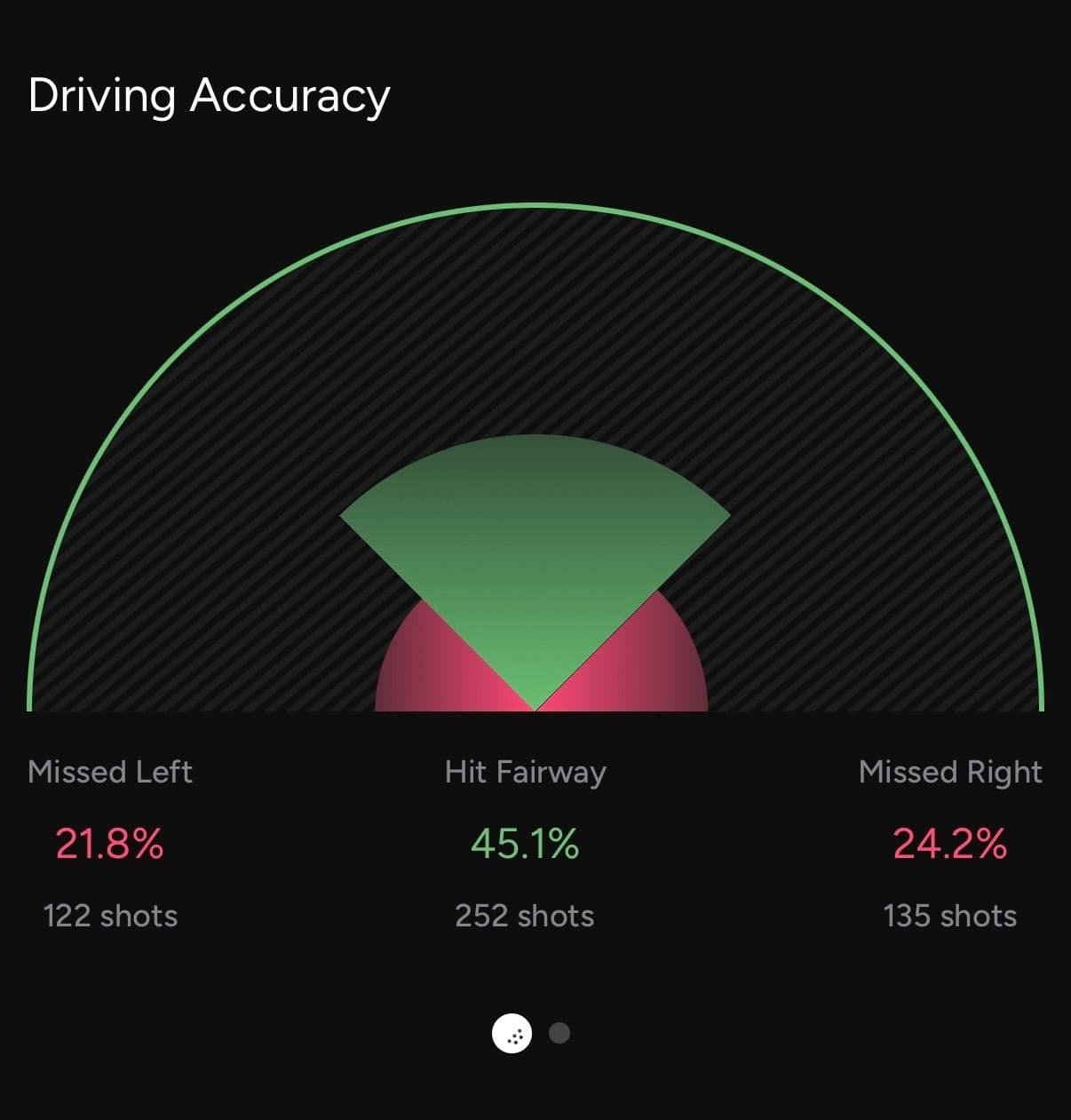
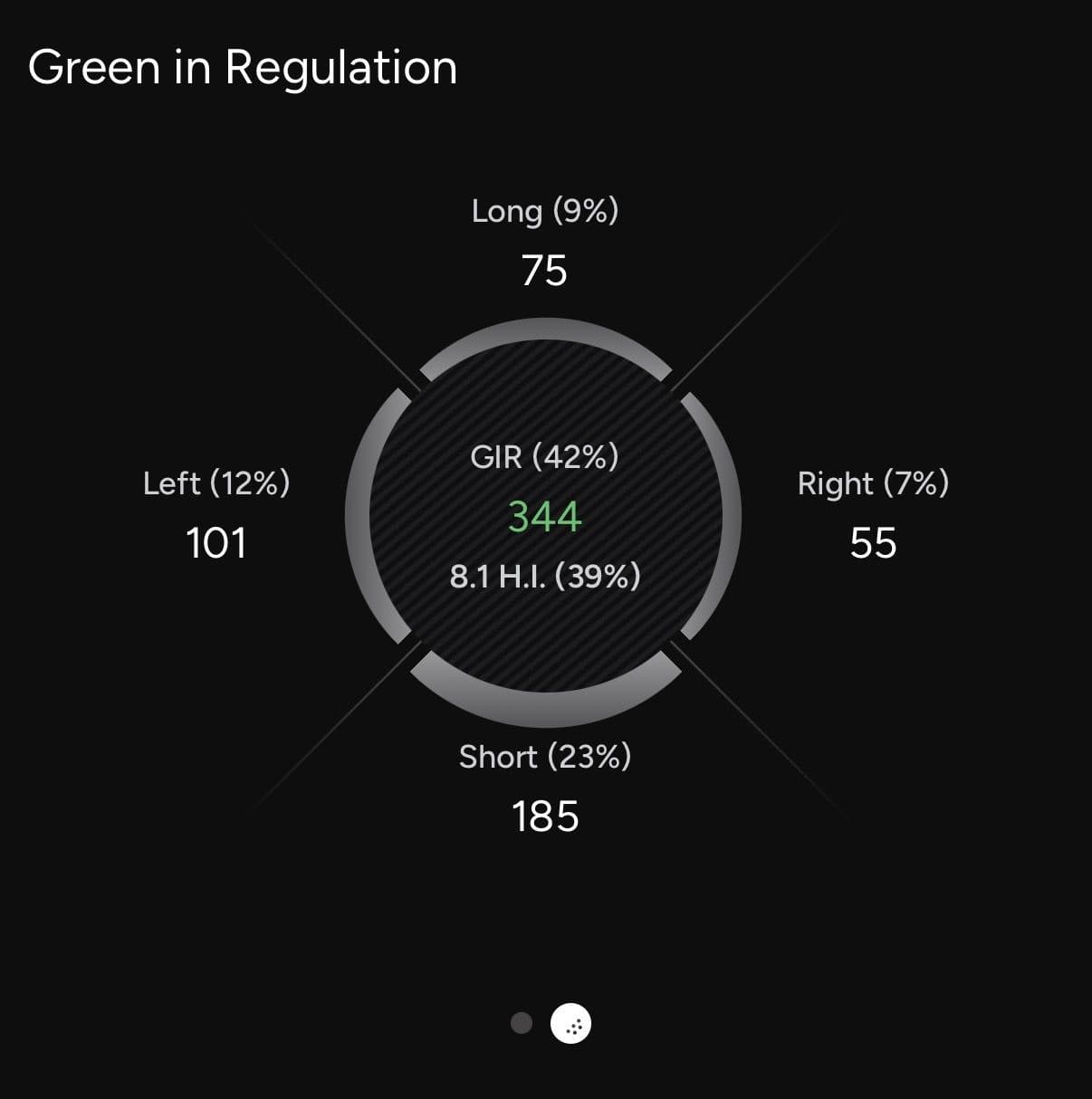
Where are your misses? Pay attention to which side you're missing your drives, and how often you're coming up short on approach shots. Short misses into trouble are almost always a club selection problem, not a swing problem. GolfN's shot tracking shows you the pattern across multiple rounds so you're not guessing.
Putting. There are a lot of ways to look at putting stats, but here's the simple benchmark for breaking 90: if you're averaging fewer than 34 putts over 18 holes, putting is probably not the liability that's keeping you in the 90s. Under 34 putts means you're getting up and down or two-putting at a reasonable clip. If you're consistently over 36 putts, that's where to focus. The goal isn't making more long putts. It's eliminating the three-putts.
What a Round That Breaks 90 Actually Looks Like
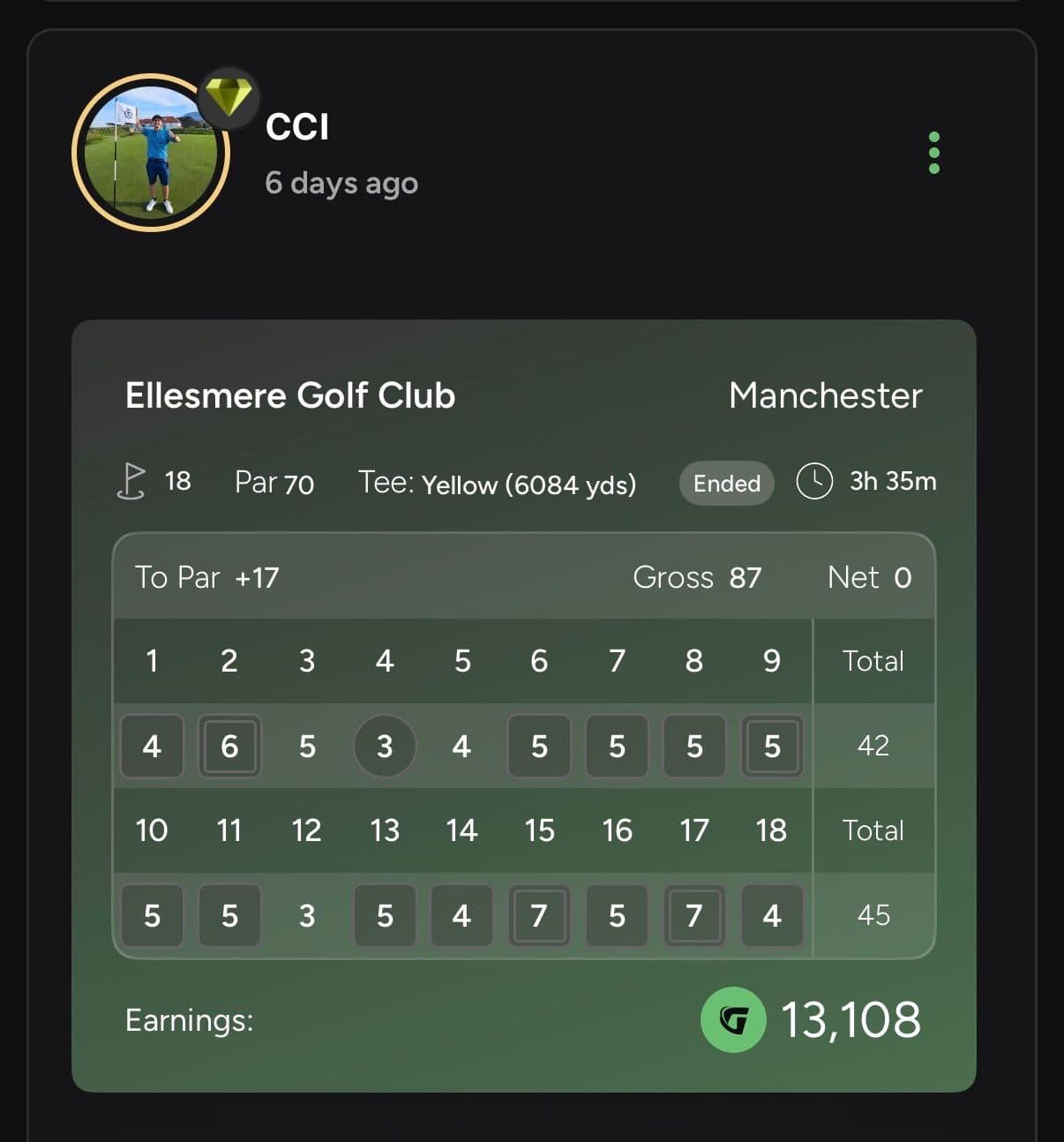
It doesn't look like four birdies and a bunch of pars. It looks something like this: 12 bogeys, 4 pars, and 2 doubles. That's 88.
The path to get there isn't a secret or new equipment. Keep the ball in play off the tee, clean up the wedge game, play tees that match your ability, and refuse to let one bad hole turn into two. Do those four things for 18 holes, and you'll be surprised how quickly the math works in your favor.
GolfN tracks your penalties, your misses, and your putting stats automatically across every round, and rewards you for every one you post. Download GolfN free and start seeing the patterns in your game.

Brandon Tucker is GolfN's Communications Director and Editor-at-Large. He's spent his life playing and working in the game of golf, from working mini golf courses and country club cart barns as a youth to writing, editing and production in his career. Prior to joining GolfN he was the Managing Editor for Golf Channel's Courses & Travel and GolfPass, and before that contributed to the WorldGolf.com network of websites. While at NBCUniversal/Golf Channel, he contributed travel segments to Morning Drive and Golf Central shows, and launched the Golf Advisor website, later rebranded to GolfPass. Tucker loves Top 100 rankings but launched the Golfers Choice awards at Golf Advisor to give any golf course, regardless of prestige, a chance to be recognized for exceptional operations. Tucker now lives in Texas but goes back to Michigan every summer strictly to play twilight golf.
Explore More GolfN Articles
View all
GolfN vs 18Birdies (2026): Which Golf App Is Right for You?
GolfN vs 18Birdies compared side-by-side in 2026 — GPS accuracy, stat tracking, pricing, and the one feature 18Birdies doesn't have. Find out which app is right for your game.

Walk the Course Like a Pro: Enter to Win the Stewart Golf Q Follow
The Q Follow is the latest opportunity in the GolfN app to score rewards for golf from the best brands in the game.

Golf Course Etiquette: The Complete Guide for Every Golfer (2026)
Think golf etiquette is just about replacing divots? Here's what separates the golfers everyone wants to play with from the ones nobody invites back, and how to get there.