 Brandon Tucker
For many golfers, learning how to break 100 in golf is the key milestone that separates a frustrated beginner from someone who's actually starting to figure this game out.
Of course, there are variables in how tough that barrier actually is for you. How hard is your course? What tees are you playing? Do you putt everything out and play by the USGA rule book, or do you take mulligans and gimmies? Are you a senior, junior, or woman? A woman's average handicap is much different than a man's.
But in any case, breaking 100 is a huge milestone, and the momentum can propel you to breaking 90 in no time at all (breaking 80 consistently gets quite a bit harder).
I don't think you necessarily need to focus on your equipment too much trying to break 100. If your funds are finite focus more on instruction, range and playing vs. spending thousands on fancy new custom-fit gear.
Here are ten of the biggest ways to shave strokes fast.
1. Get Your Grip Right Sooner Than Later
There are many teaching professionals and methods, and you could spend thousands of dollars in a year with a pro. It's your call what kind of commitment you want to make with instruction. But if you do one instructional session, make it about your grip. A bad grip doesn't work with a good swing and vice versa. The grip is the foundation for your entire game. The earlier you get it right, the easier everything else becomes.
And once you settle on a grip that works for you, hit the range and get comfortable with it before taking it to the first tee.
2. Stop Wasting Shots Around the Green
Too many new golfers don't concentrate over putts and chips, thinking they are somehow "easier" shots with less to lose than teeing off. This is the opposite mindset you should have. Too many newer players flub chips or three- and four-putt. When you're inside 50 yards, make it a point to get down in three shots, every time.
If you can two-putt from 20-30 feet regularly you're doing great. Always be mindful of the speed - it's almost always more important than line with lag putting.
3. Play the Easy Shot
Just because you hit a high draw once it doesn't mean you can do it on demand. The game is hard enough. Be realistic about your game and don't make it harder on yourself by swinging too hard with a driver, or trying to pure your irons (poorer players almost always come up short on approach shots - so it typically doesn't hurt to take a little more club).
Newer players are better off hitting chips and pitches as simply and as low to the ground as possible. This is a key tenet of teaching legend Harvey Penick, who said you should think about how you'd throw a ball to the hole: it's always low and running, not high up in the air. There's no shame in putting from off the green, either. Plenty of single-digit handicappers swear by it too.
4. Mind your Course Management
New players often hit driver on every hole and aim straight at the pin on every approach. You should have a reasonable understanding of your shot dispersion with each club. When you're on the tee, look for the yardage that has the widest area to miss and aim for that instead of swinging for the fences.
On approach shots, aim for the center of greens and don't chase tucked pins. Leaving yourself short-sided is a recipe for bogeys and worse.
I've seen far too many new-ish players take on unnecessary risks and carries. If you can go a round without more than 1-2 penalty strokes you're well on your way to scoring improvements.
5. Know Your Miss Tendencies
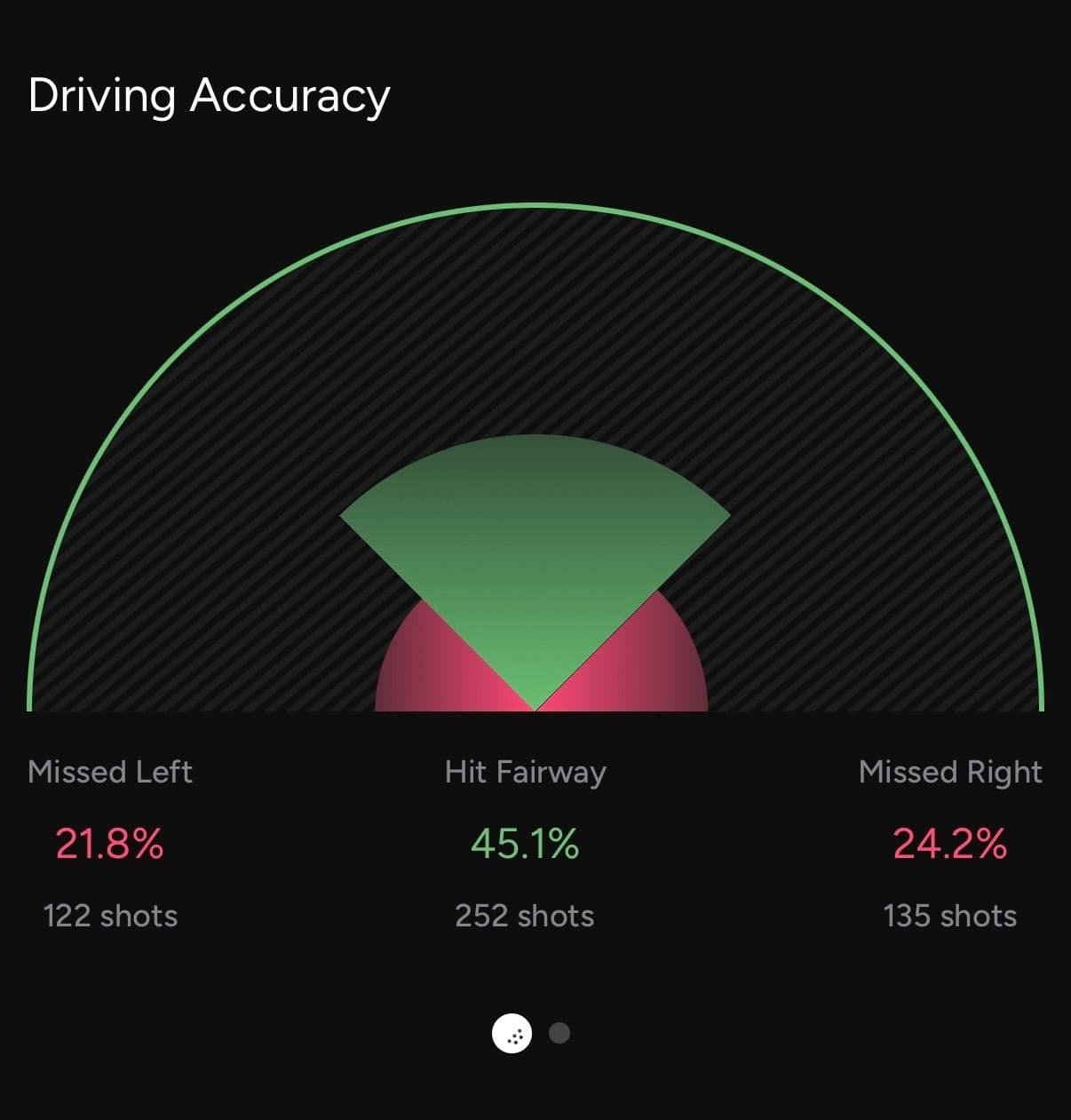
A key component of good course management is understanding your misses so you can aim appropriately. Better players are able to eliminate a "two-way miss." You probably can't eliminate one side of the course entirely, but if you have a relatively reliable tendency to miss in one direction, aim away from that side and play to your miss. Tracking your stats with GolfN will show you your tendencies off the tee and on the green faster than you'd spot them on your own. This is a free feature in the app - one that other apps typically charge a monthly or annual fee for.
6. Play the Right Tees
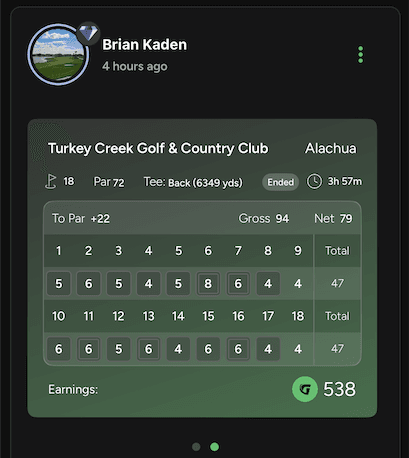
If you're not breaking 100, you shouldn't even look at the back tees, and should probably avoid the middle-backs as well. White tees, usually the tee just behind the forward tees, are where you want to be. There's no need to play a golf course longer than 6,000 yards while you continue to learn the game.
7. Practice With a Plan
When you go to the gym, you have a plan: legs one day, upper body another, core work, and so on. A golf practice session should be no different. You should work through your entire bag intentionally, with a pre-shot routine on every swing. And every practice session should include at least a few minutes of short game work, whether it's putting or chipping.
8. Learn to Hit It Far
The "drive for show, putt for dough" motto has been disproven by statistician Mark Broadie and strokes gained analytics. Simply put, it's a huge advantage to hit it far. In most cases, your swing technique is going to limit your distance more than your physical condition - though we could all be more limber and strong in the core. Juniors are typically advised to learn to hit it far first and straight second. As an adult, you should strive to consistently hit it 220 to 240 yards which enables you to reach just about any par 4 in two shots. Personal launch monitors that can be used indoors and out, that measure 5-10 metrics like swing speed and smash factor, combined with instruction, or even AI-assisted analysis, can guide you toward which numbers to work on for more distance.
9. Play With Better Players
You might be embarrassed to play with single-digit handicappers, but don't be. As long as you've got decent etiquette and can keep pace, they won't mind at all. You can learn a lot by watching good players: their course management, their pre-shot routine, their attention to detail. It's not so much about copying their swing as absorbing all of their other good habits.
10. Just Play More
The greatest barrier to lower scores for most golfers is simply the opportunity to play more. GolfN makes that more incentivizing than ever. The more you play, the more points you earn, and you can redeem those points toward new gear from top brands like L.A.B., Cobra, and Srixon. GolfN members are playing better because they're playing more. That's not a coincidence.
Try this: sign up for GolfN and use my promo code "BTUCK" for a free month of Silver upgraded membership. Play as many times as you can in that month, and see if your scores drop. I'll bet they do.

Brandon Tucker is GolfN's Communications Director and Editor-at-Large. He's spent his life playing and working in the game of golf, from working mini golf courses and country club cart barns as a youth to writing, editing and production in his career. Prior to joining GolfN he was the Managing Editor for Golf Channel's Courses & Travel and GolfPass, and before that contributed to the WorldGolf.com network of websites. While at NBCUniversal/Golf Channel, he contributed travel segments to Morning Drive and Golf Central shows, and launched the Golf Advisor website, later rebranded to GolfPass. Tucker loves Top 100 rankings but launched the Golfers Choice awards at Golf Advisor to give any golf course, regardless of prestige, a chance to be recognized for exceptional operations. Tucker now lives in Texas but goes back to Michigan every summer strictly to play twilight golf.
Explore More GolfN Articles
View all
GolfN vs 18Birdies (2026): Which Golf App Is Right for You?
GolfN vs 18Birdies compared side-by-side in 2026 — GPS accuracy, stat tracking, pricing, and the one feature 18Birdies doesn't have. Find out which app is right for your game.

Walk the Course Like a Pro: Enter to Win the Stewart Golf Q Follow
The Q Follow is the latest opportunity in the GolfN app to score rewards for golf from the best brands in the game.

Golf Course Etiquette: The Complete Guide for Every Golfer (2026)
Think golf etiquette is just about replacing divots? Here's what separates the golfers everyone wants to play with from the ones nobody invites back, and how to get there.