 Brandon Tucker
If you play golf enough, at some point you're going to want to get better at it.
These days you can slice and dice your score so much that you can do as much as you want with stats. But it can also get overwhelming. After all, if you're tracking everything, you're not really focused on anything.
So you should be realistic about how much you plan to practice, analyze, and work to improve before you lock in on a specific stat-tracking system. Start with the basics, get consistent about recording them, and layer in complexity only when the simpler numbers stop telling you what you need to know.
Tracking Your Score
This is golf statistics at its core. Are you playing a golf course in fewer strokes today than you were last month? Eventually, watching your handicap index come down over time is the most satisfying metric to track, maybe even more than adding yards off the tee.
You can keep your handicap officially via GHIN - which takes the average of your best 8 rounds over the last 20. As it falls, you know you're on the right track. And fortunately the system doesn't penalize you for too many outlier poor rounds.
But the score alone is not very insightful. You need data on how and where you're losing strokes in order to improve.
Advanced Statistics: The Traditional Approach
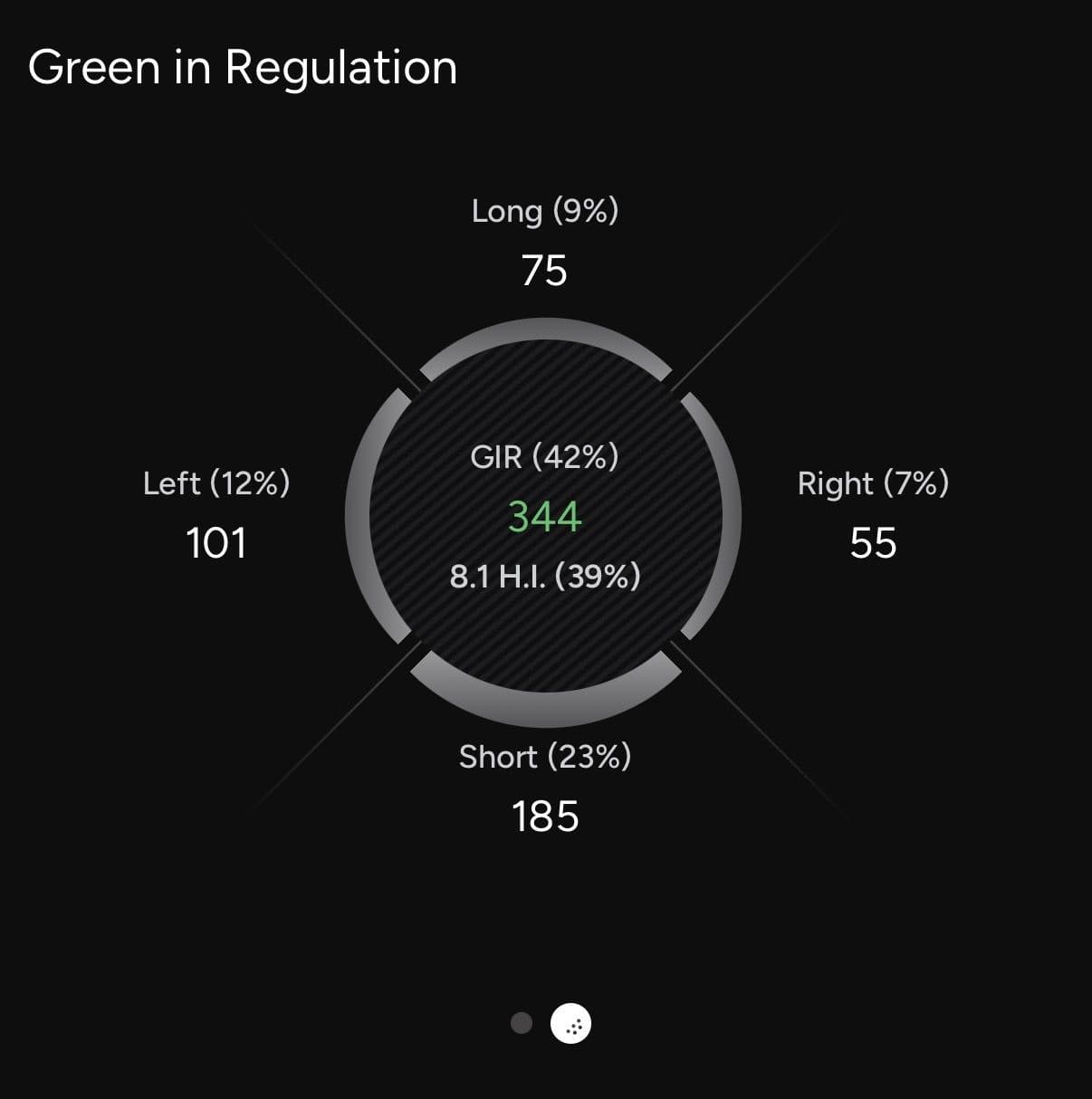
Score isn't going to tell you very much on its own. So start keeping advanced statistics: fairways, greens, putts, and penalties. Better yet, track which direction you're missing fairways and greens to get a sense of your tendencies over time.
In the GolfN app, on each hole you can enter your score as well as fairways, greens, and putts. You can also log penalty strokes. By charting your fairways and greens, along with the direction of your misses, you can start spotting patterns in your game. Toggle between All-Time, Last 10 Rounds, and Last Year to see how your numbers have shifted.
"Scrambling" is another important stat and a strong indicator of short game savvy. It measures how often you get up and down when you've missed the green in regulation. A golfer who scrambles 40% of the time is leaving far fewer double bogeys on the card than one scrambling 20%, even if their ball-striking stats look similar. Tracking it over time reveals whether your short game is actually improving or just feeling better.
Another metric to consider is your scoring average based on the par of the hole. This is another area you can view to see if your strategy on these pars is working or not. You can also get insights on your scoring average on a par based on whether you hit the fairway or the green.
Something I've noticed in my personal data is that hitting the fairway nets me about half a shot better on average than missing it. While hitting the green is nearly a full shot better than missing it. I can gain a lot of ground by hitting more greens on par 3s.
You can also plug your GolfN statistics into an AI model that can provide recommendations about where you're losing strokes versus players at your ability level.
Strokes Gained Statistics
Here's where traditional advanced stats hit their limit. Say you're on the fringe, 20 feet away, and get down in two. That counts as a one-putt and the stats will say you had a good putting hole, even though there's nothing remarkable about it. Now say you're 40 feet away and three-putt. Suddenly the stats say putting is your problem, when really you hit a tough approach and faced a genuinely difficult putt.
Mark Broadie, a professor at Columbia Business School, invented the Strokes Gained approach to solve for exactly this. The idea is that it evaluates each shot you hit relative to the field, a large shot library across all handicap levels, giving you a picture of whether each shot was better or worse than expected given where you started.
This has had a profound effect on strategy at both the amateur and pro levels. Strokes Gained has essentially proved two things:
Fairways don't matter as much as distance off the tee. As long as your drive is safe and the approach is unobstructed, being in the rough 100 yards out is often better than being in the fairway at 140.
Average proximity to the hole on approach shots is the single most predictive stat for scoring. It's how Tiger Woods dominated in his prime, and it's what the data keeps pointing back to at every skill level.
Strokes Gained is also a useful guide for where to spend your practice time. Most golfers are going to two-putt from 20 feet, and the odds of making one aren't high. You're better off practicing 6 to 10 footers, where you have a 25 to 75% conversion rate and more opportunity to gain strokes on the field.
Swing Metrics
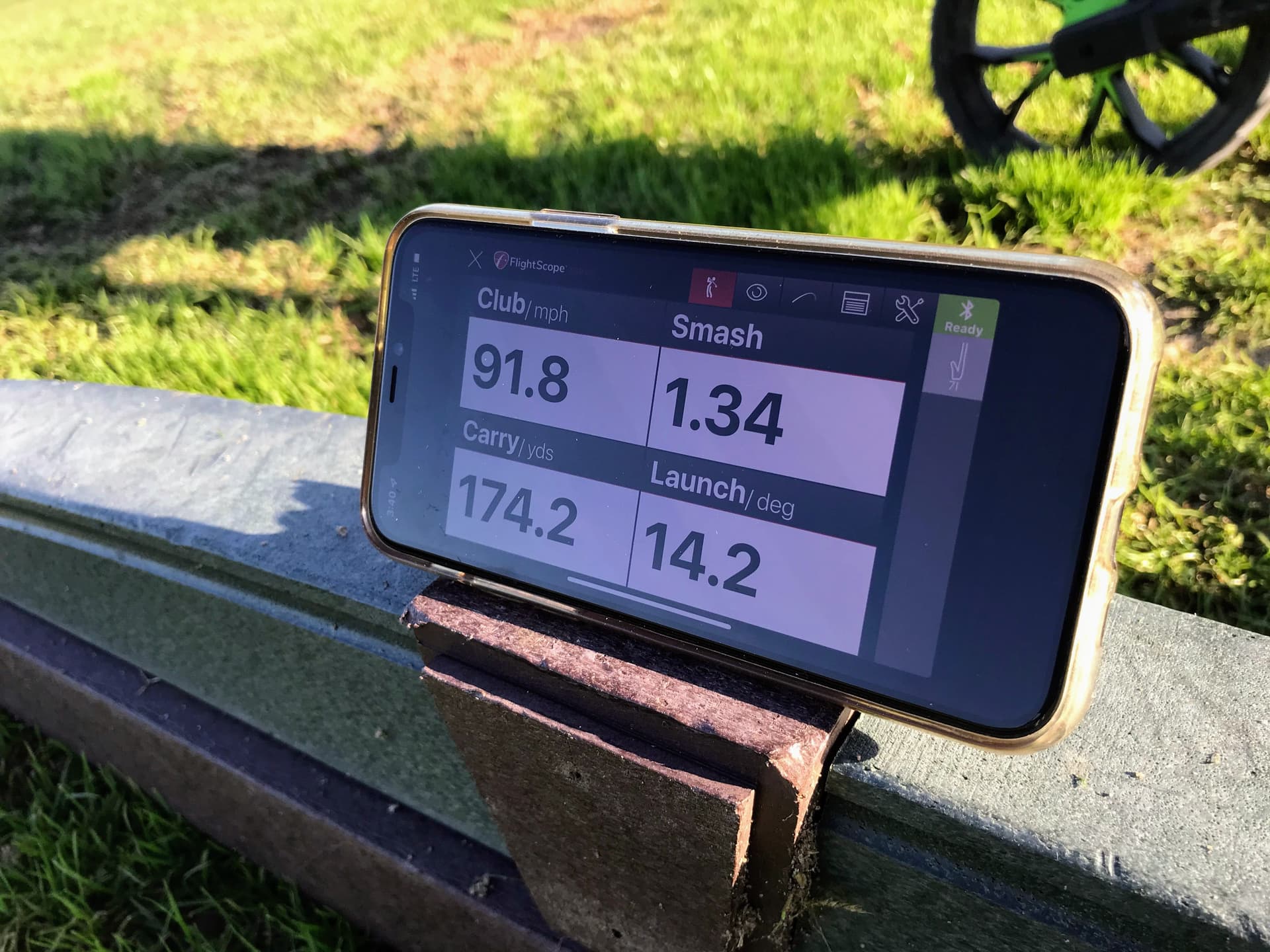
The last layer is launch monitor data. Driving ranges and simulators are increasingly equipped with monitors that track ball speed, clubhead speed, launch angle, spin rate, and smash factor, as well as carry and total yardages. Professionals like Scottie Scheffler can predict their carry on any given shot to within a yard or two. In the offseason, identifying two or three specific numbers to improve, swing speed, launch consistency, spin variance, gives your practice sessions a precision that "hit more balls" never will.
Which Golf App Should You Use for Stat Tracking?
Many golf apps offer advanced statistics locked behind a monthly premium subscription. GolfN offers free scoring and traditional stat tracking. No paywall, no feature demo, just the full suite of advanced stats and history from the first round you log.
If you want to layer in Strokes Gained data through a dedicated tracking system like Arccos, Shot Scope, or Decade, you don't have to choose. Run both apps simultaneously, start your strokes gained app, then open GolfN, tee off, and you'll earn rewards with GolfN while capturing your advanced shot data through the other app. It's the best of both worlds.
And since GolfN rewards you for every round you play, regardless of which other apps you're running alongside it, there's no reason to leave points on the table.
Download GolfN free, track your stats, and start earning rewards on your next round. Use my promo code 'btuck' for a month of free Silver-tier rewards.

Brandon Tucker is GolfN's Communications Director and Editor-at-Large. He's spent his life playing and working in the game of golf, from working mini golf courses and country club cart barns as a youth to writing, editing and production in his career. Prior to joining GolfN he was the Managing Editor for Golf Channel's Courses & Travel and GolfPass, and before that contributed to the WorldGolf.com network of websites. While at NBCUniversal/Golf Channel, he contributed travel segments to Morning Drive and Golf Central shows, and launched the Golf Advisor website, later rebranded to GolfPass. Tucker loves Top 100 rankings but launched the Golfers Choice awards at Golf Advisor to give any golf course, regardless of prestige, a chance to be recognized for exceptional operations. Tucker now lives in Texas but goes back to Michigan every summer strictly to play twilight golf.
Explore More GolfN Articles
View all
GolfN vs 18Birdies (2026): Which Golf App Is Right for You?
GolfN vs 18Birdies compared side-by-side in 2026 — GPS accuracy, stat tracking, pricing, and the one feature 18Birdies doesn't have. Find out which app is right for your game.

Walk the Course Like a Pro: Enter to Win the Stewart Golf Q Follow
The Q Follow is the latest opportunity in the GolfN app to score rewards for golf from the best brands in the game.
Caddy Splash Pro: Now available in the Pro Shop
Clean grooves, better contact, more spin. Caddy Splash is now available in the GolfN Pro Shop.